The Complete 2026 Guide to Physiotherapy Practice Management Software
Everything You Need to Know About Running a Modern Physiotherapy Clinic with Digital Tools
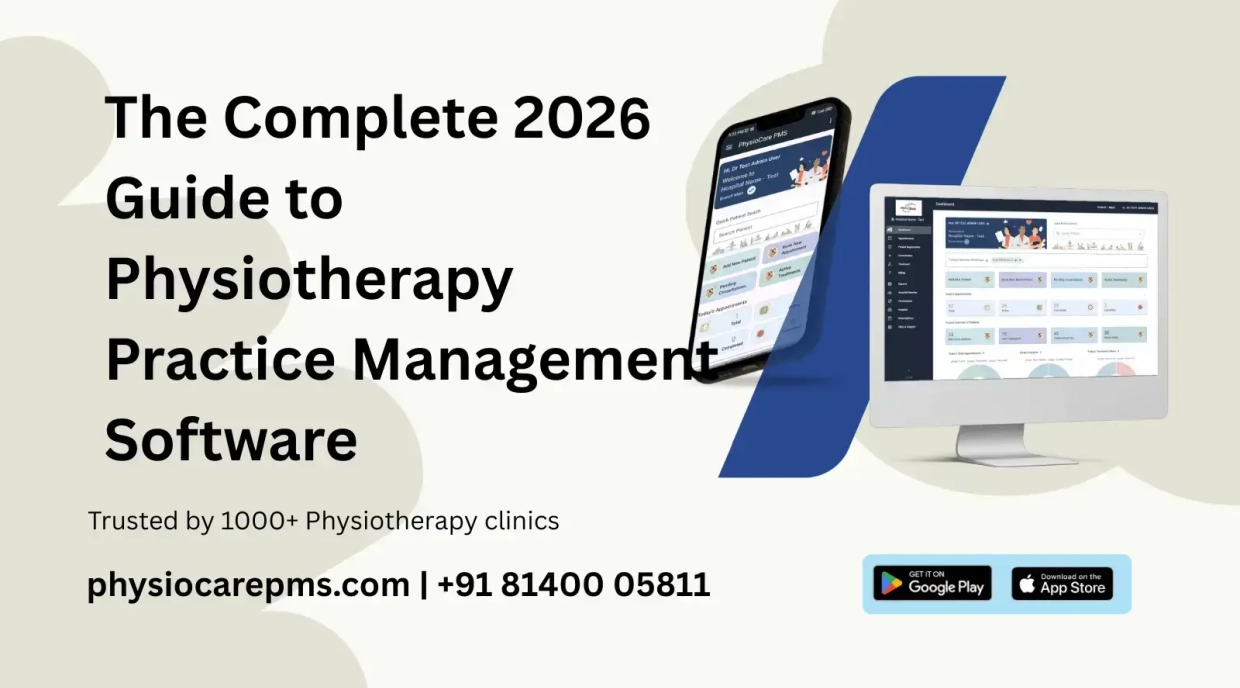
Managing a physiotherapy clinic is about more than just treating patients. From scheduling and billing to patient records and follow-ups, the day-to-day admin can quickly become overwhelming. That's where Physiotherapy Practice Management Software (PMS) comes in.
Whether you run a solo practice, home visit service, or a multi-clinic brand, PMS helps you streamline operations and offer a better patient experience.
What is Physiotherapy Practice Management Software?
Physiotherapy Practice Management Software (PMS) is a specialized ecosystem designed to handle the unique clinical and administrative needs of physiotherapy practices. Unlike generic medical software, a dedicated physio PMS understands the nuances of multi-session treatment plans, functional assessments, body chart documentation, and outcome measure tracking.
It acts as the central nervous system of a clinic, integrating:
• Administrative workflows (scheduling, reception management)
• Clinical documentation (EMR, soap notes, digital prescriptions)
• Financial operations (invoicing, packages, insurance claims)
• Patient engagement (reminders, feedback, education)
Why Modern Clinics Cannot Survive Without It
In 2026, patient expectations have evolved. Patients demand Appointment booking options, digital records, and instant communication via WhatsApp or SMS. Clinics relying on manual processes face:
- High No-Show Rates: Without automated follow-ups, 20-30% of appointments may be missed.
- Revenue Leakage: Manual billing leads to uncollected payments and lost track of package sessions.
- Compliance Risks: Incomplete paper notes can be a liability during audits or legal claims.
- Operational Bottlenecks: Therapists spending more time writing notes than treating patients.
Key Features That define a Superior PMS
1. Intelligent Appointment Scheduling
Look for a smart calendar that handles recurring appointments (common in rehab plans), detects double bookings, and allows color-coding for different appointment types (e.g., Initial Assessment vs. Routine Follow-up). Integration with SMS/WhatsApp for automated confirmations is non-negotiable.
2. Specialized Clinical EMR
Generic text boxes aren't enough. A good PMS offers interactive body charts for pain mapping, ROM (Range of Motion) tracking tables, and specialized templates for conditions like Stroke, ACL Rehab, or Back Pain. This ensures documentation is fast, visual, and clinically accurate.
3. Financial & Package Management
Physiotherapy often involves package deals (e.g., "10 sessions for ₹5000"). The software must automatically track session utilization, alert front desk staff when a package is expiring, and manage partial payments and wallet balances seamlessly.
4. Analytics & Reporting
To grow, you need data. Your dashboard should show daily revenue, active patient counts, therapist productivity, and lead conversion rates (how many inquiries turned into patients).
Case Study: Transforming a Multi-Chain Clinic
The Challenge: Dr. Kunal, managing 4 clinics in Mumbai, struggled with centralized control. His receptionists used separate Excel sheets, leading to double bookings and zero visibility into daily collections.
The Solution: Implementing PhysioCare PMS unified all 4 branches on a single cloud platform. He enabled role-based access for 12 therapists and centralized the appointment booking system.
The Results (After 6 Months):
✅ 60% reduction in patient no-shows due to automated WhatsApp reminders.
✅ 40% increase in package renewal rates thanks to timely expiry alerts.
✅ 15 hours/week saved on administrative tasks, allowing Dr. Kunal to focus on expansion.
How to Choose the Right Software?
Start by identifying your pain points. Is it scheduling? Billing? Documentation? Request a demo and ask specific questions: "Can this handle home visit records?", "Does it work offline?", "Is my data portable?". Choose a partner like PhysioCare PMS that offers local support and continuous updates based on user feedback.
Conclusion: If you're still relying on Excel sheets and manual processes, you're missing out on the opportunity to grow faster, work smarter, and deliver more consistent care. A good Physiotherapy Practice Management Software like PhysioCare PMS can be a game-changer.
Try PhysioCare PMS Free for 10 DaysTrusted by 1000+ physiotherapy, chiropractic, and rehab clinics across India.
Related Workflows & Further Reading
Recent Posts
