Manual vs Software-Based Clinic Management: What’s Better for Physiotherapists?
Explore the pros and cons of traditional manual clinic management versus modern software solutions, and learn which approach helps physiotherapy practices scale with less risk and more efficiency.
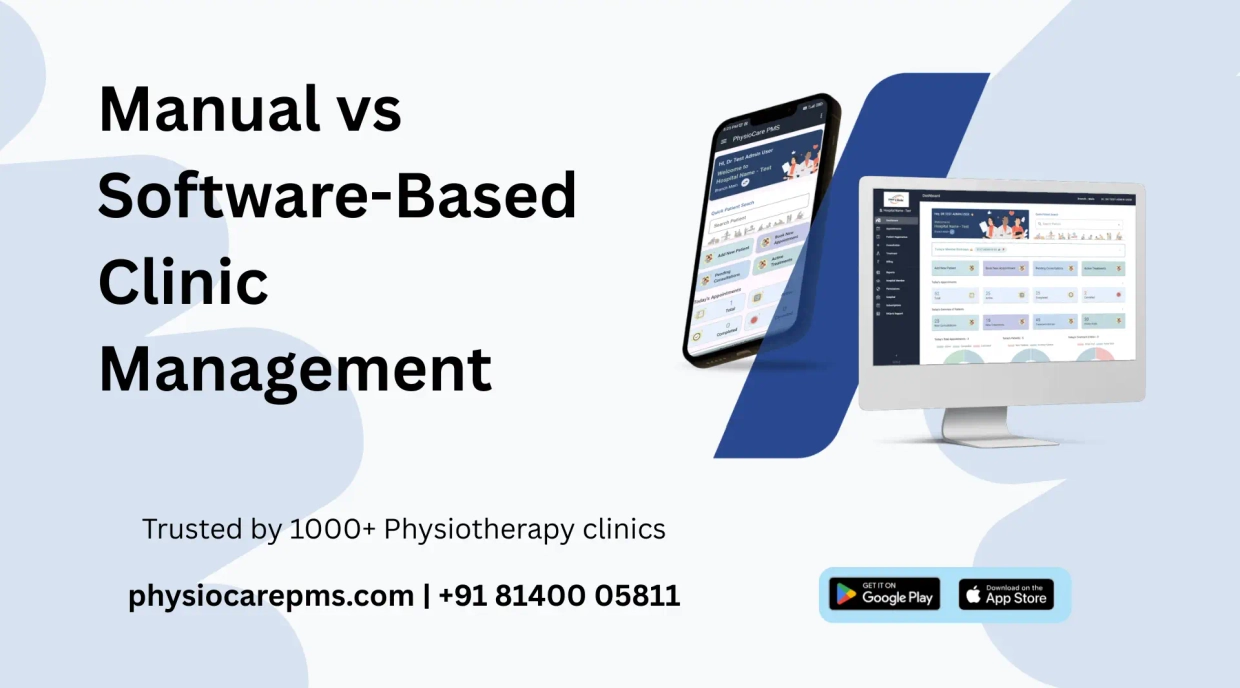
In the ever-evolving world of healthcare, physiotherapy clinics face increasing demands for efficiency, organization, and quality patient care. As patient numbers rise and services expand, clinic management becomes a critical factor in ensuring operations run smoothly.
This has led many practitioners to ask: should we keep managing the clinic with manual systems, or move to modern software-based solutions?
In this blog post, we compare both approaches so physiotherapists can make informed decisions about their clinic management strategy.
The Traditional Way
Many physiotherapy clinics still rely on traditional methods to manage operations. This often includes:
- Paper registers: physical files with patient information.
- Handwritten prescriptions: treatment plans written by hand.
- Manual appointment books: schedules tracked in calendars or notebooks.
While these systems may function adequately when the clinic is small, they present significant challenges as patient numbers grow. The intricacies of managing multiple patients and therapists can quickly lead to inefficiencies and errors.
Example: A Small Clinic's Struggle
Consider a small physiotherapy clinic with just one therapist serving a handful of patients each day. In this scenario, maintaining paper records might be manageable; however, as the client base expands—perhaps due to an effective marketing campaign—this same therapist could quickly find themselves overwhelmed by stacks of paperwork and scheduling conflicts.
Problems with Manual Systems
Manual clinic management often causes issues that hurt both efficiency and patient care.
- Lost Patient Records:Misplacing paper records can result in incomplete treatment histories or vital information being unavailable during appointments.
- Scheduling Mistakes: Double bookings or missed appointments can occur frequently when relying on handwritten schedules.
- Billing Confusion: Manual billing processes increase the likelihood of errors in invoicing patients or insurance companies.
- Limited Performance Tracking: Without digital tools, tracking key performance indicators such as patient retention rates or total visits becomes cumbersome if not impossible.
These problems not only reduce operational efficiency but also affect patient satisfaction and the clinic’s reputation.
Example: A Scheduling Error Scenario
A therapist accidentally books two patients in the same time slot because the paper diary was not updated. The result is frustrated patients, lost revenue, and a damaged professional image.
Benefits of Software-Based Management
Transitioning to software-based clinic management brings numerous benefits that help address many issues associated with manual systems:
- Appointment Scheduling: Calendar features allow therapists to schedule appointments efficiently while minimizing conflicts through automated alerts for overlapping bookings.
- Patient Records Management: Digital storage means all pertinent health information is easily accessible—eliminating concerns about lost files or miscommunication regarding treatment histories.
- Streamlined Billing: Automated billing solutions reduce human error and provide clear invoices tailored for both patients and insurance providers.
- Therapist Availability:By allowing real-time updates on therapist availability, clinics can optimize staff resources effectively based on demand patterns.
- Online Patient Self-Booking: Software-based systems can provide patients with a secure online appointment booking link so they can book their own appointments 24/7 via OTP login — no phone call required. This is simply impossible with manual methods, and it dramatically reduces front-desk scheduling calls.
Actionable Insights
- Evaluate your current pain points associated with manual systems—identify specific challenges that hinder your workflow.
- Research various *physiotherapy clinic management software* options available in the market that cater specifically to your needs (e.g., appointment scheduling features, billing capabilities).
- Seek feedback from colleagues who have made similar transitions; real-life experiences can offer invaluable insights into potential pitfalls and advantages you might encounter during implementation.
- Consider starting with a trial version of selected software before committing fully; hands-on experience will provide clarity on usability and fit within your practice's culture.
Scalability
One major advantage of software is scalability: growing without losing control over operations.
- Multiple Therapists: manage several schedules simultaneously with fewer conflicts.
- Larger Patient Volumes: automate routine tasks so larger caseloads remain manageable.
- Multiple Locations: centralize oversight across clinics while keeping local operations smooth.
Example: Expansion Success Story
A regional physiotherapy network grew from one clinic to three locations over five years. After adopting software-based management, they gained visibility across sites, reduced administrative errors, and improved coordination between therapists.
Final Thoughts
For growing clinics, manual methods become a liability. Software-based management offers better scheduling, secure patient records, reliable billing, and data-driven insights.
If your clinic is expanding or facing repeated process issues, digital solutions can make your operations more efficient and help you deliver better patient care.
Now is the time to explore which physiotherapy clinic management software fits your unique needs and helps you build a stronger, more scalable practice — including giving patients the ability to book appointments online at their own convenience.
Work smarter, not harder.
Related Workflows & Further Reading
Recent Posts
