Healthcare Compliance in the UAE and Australia: How Physiotherapy Software Ensures Regulatory Adherence
How Physiotherapy Practice Management Software Ensures Compliance in the UAE and Australia
Navigating healthcare regulations can feel like traversing a minefield. For physiotherapy clinic owners in the UAE and Australia, the stakes are incredibly high: one misstep in documentation, patient consent, or data security can lead to severe penalties, reputational damage, and compromised patient care. Manual processes, spreadsheets, paper files, and memory, are no longer sufficient. The solution? Specialized physiotherapy patient management software. This article will demystify the complex regulatory landscapes of both regions and show you precisely how the right software is not just a tool, but a critical compliance partner that safeguards your practice.
Understanding Healthcare Compliance in UAE and Australia
Compliance isn't about bureaucracy; it’s the foundation of safe, ethical, and trustworthy patient care. The frameworks in the UAE and Australia, while distinct, share a common goal: protecting patients and ensuring high standards of practice. Failure to comply isn't merely an administrative error; it can result in hefty fines, suspension of licenses, and a catastrophic loss of patient trust. Understanding these frameworks is the first step toward building a resilient practice.
UAE Healthcare Compliance for Physiotherapists
The UAE’s healthcare system is rapidly evolving, with a strong emphasis on standardization and digital transformation. Compliance is enforced through federal and emirate-specific authorities.
The cornerstone of health data regulation is Federal Law No. 7 of 2015, concerning the Practice of Human Medicine Profession. This law mandates strict protocols for patient confidentiality, record-keeping, and professional conduct. Crucially, the UAE’s Data Protection Law, influenced by global standards, imposes stringent rules on the processing of personal health data. Key requirements include:
- Explicit Patient Consent: You must obtain and digitally record informed consent for treatment and data processing, clearly stating the purpose.
- Secure Documentation: Patient records, including medical history, assessment notes, treatment plans, and progress reports, must be maintained accurately, confidentially, and be readily retrievable for a minimum period as defined by authorities like the Ministry of Health and Prevention (MoHAP) or the Dubai Health Authority (DHA).
- Data Localization and Transfer: There are often restrictions on transferring patient data outside the UAE, requiring secure, locally-hosted or compliant cloud software solutions.
Regulatory bodies like MoHAP, DHA, and the Health Authority – Abu Dhabi (HAAD) conduct regular audits. Presenting disorganized or incomplete records during an audit is a direct path to non-compliance citations.
Australian Healthcare Compliance for Physiotherapists
In Australia, compliance is a multi-layered framework designed to protect public safety and ensure the integrity of the healthcare system. The Australian Health Practitioner Regulation Agency (AHPRA) sets the national standard for registration and professional conduct, which all physiotherapists must adhere to.
The Privacy Act 1988 and its Australian Privacy Principles (APPs) are the bedrock of data protection. They govern how clinics collect, use, store, and disclose personal information (especially sensitive health information). Key obligations include taking reasonable steps to protect data from misuse and giving patients access to their own records.
For clinics dealing with Medicare, the Health Insurance Act 1973 introduces another layer. Billing for services like Chronic Disease Management plans or Team Care Arrangements requires meticulous documentation to justify the service and prevent fraudulent claims. The Professional Indemnity Insurance (PII) regulations also make accurate record-keeping essential for legal defence.
Common Challenges in Both Regions:
- Keeping Up with Changes: Regulations are not static. New guidelines, billing codes, and privacy amendments are released regularly.
- Consistency Across Staff: Different therapists may document the same treatment in vastly different ways, creating audit risks.
- Data Security Threats: The rise of cyber-attacks targeting healthcare data makes robust digital security non-negotiable.
- Time Consumption: Manual compliance eats into clinical time and practice revenue.
The Role of Physiotherapy Software in Ensuring Compliance
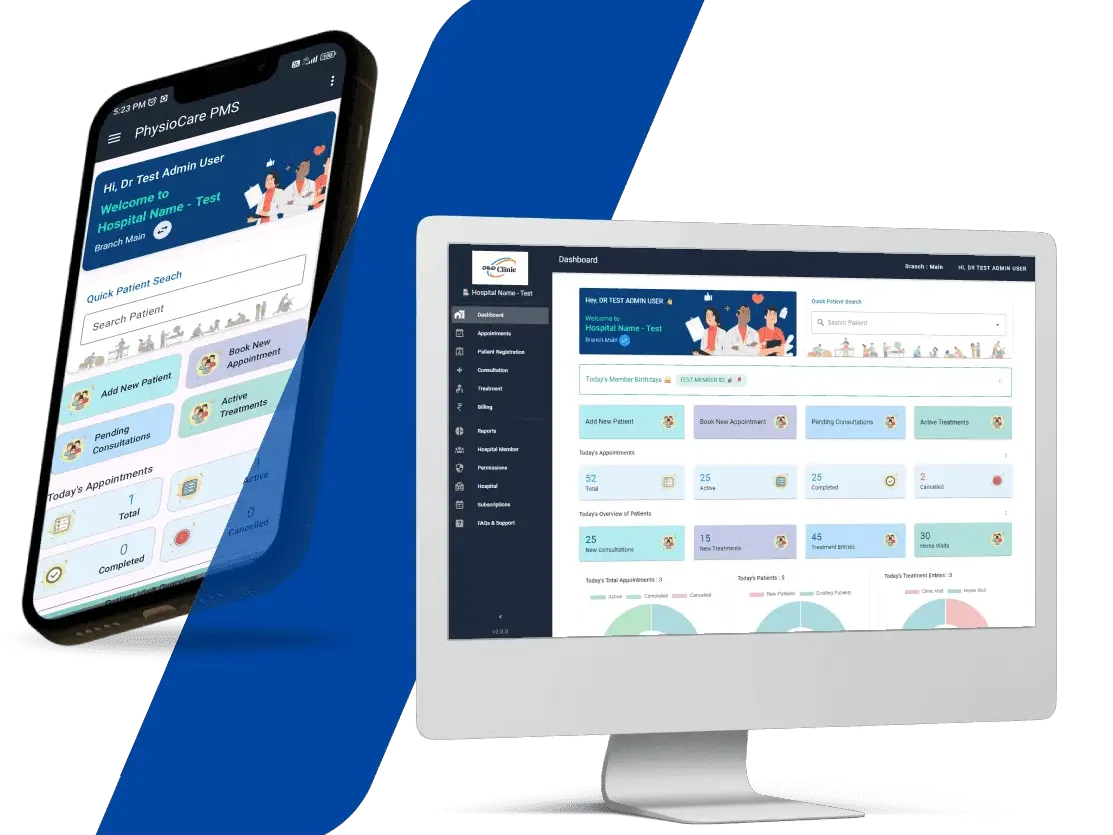
Modern physiotherapy patient management software transforms compliance from a burdensome chore into an automated, integrated part of your daily workflow. It acts as a centralized command center for all regulatory requirements.
Data Security and Patient Privacy
This is where software provides irreplaceable value. A robust system ensures your clinic meets the highest standards of data security in healthcare software.
- Encryption: Look for software that offers end-to-end encryption. This means patient data is scrambled both when stored (at rest) and when being sent between devices or to third parties like insurers (in transit), making it unreadable to unauthorized parties. This is a fundamental requirement under both UAE data law and Australia’s APPs.
- Access Controls: Role-based permissions are crucial. Reception staff may access appointment details but not clinical notes. Physiotherapists can access their own patient files. Only practice owners or managers have full administrative rights. This creates a clear audit trail of who accessed what and when, a key demand during regulatory inspections.
- Secure Hosting: Reputable software providers use enterprise-grade, secure cloud servers with regular backups and disaster recovery protocols. This is often more secure than physical files or local servers and helps meet data sovereignty requirements.
Reporting and Audit Capabilities
When an audit notice arrives, panic shouldn’t. The right software turns audit preparation from a week-long scramble into a few clicks.
Automated compliance reporting features allow you to generate predefined reports for specific regulators. Need to demonstrate a patient’s treatment journey for a DHA audit? Or extract all Medicare-billed sessions for a particular period for a Health Insurance Commission review? The software can produce this instantly, with consistent, legible formatting.
The system automatically maintains a complete log of all actions—every note edited, invoice created, or consent form signed—with a timestamp and user ID. This immutable log is your best defence, proving the integrity and chronology of your records.
| Compliance Task (Manual) | Compliance Task (With Software) |
|---|---|
| Physically searching filing cabinets for a patient's historical records. | Instant search and retrieval of the entire digital patient record, including notes, scans, and consents. |
| Manually compiling billing data for a Medicare audit over a financial year. | Generating a custom report for exact date ranges and service types with one click. |
| Worrying about lost or misfiled paper consent forms. | Digital consent forms stored securely against the patient profile, with date/time stamps. |
| Ensuring every staff member documents in a standardized way. | Using customizable, pre-approved templates that guide documentation and ensure nothing is missed. |
Essential Features of Compliance-Focused Physiotherapy Software
Not all practice management software is created equal. When your license depends on it, you need a system built with regulatory adherence at its core. Here are the non-negotiable features:
- Comprehensive Patient Management: This is the heart of the system. It must handle detailed patient demographics, full medical history, and all clinical interactions. Customizable assessment and treatment note templates ensure that every clinician documents the necessary subjective and objective findings, assessment, and plan (SOAP notes) consistently, meeting professional standards.
- Integrated Billing and Invoicing: For Australian practices, direct integration with Medicare and private health insurers (like HICAPS) is vital. It ensures claims are formatted correctly and submitted with the required supporting data, drastically reducing rejections. In the UAE, software that generates detailed invoices in line with DHA or insurance company requirements streamlines the reimbursement process.
- Consent and Document Management: The software should have a dedicated module to capture, store, and manage digital patient consent forms. These should be linked to specific treatments or data use policies and be easily retrievable.
- Automated Communication & Reminders: Automated SMS or email reminders for appointments reduce no-shows, but from a compliance perspective, they also provide a record of patient communication. Secure, in-platform messaging for follow-ups or exercise prescriptions keeps all clinical communication within the protected environment.
- Scheduling with Compliance in Mind: The calendar should do more than book appointments. It should help manage therapist schedules to prevent double-booking, track patient attendance for reporting, and even flag when a patient is due for a review or their treatment plan needs renewing.
- Robust Reporting Suite: Pre-built reports for common compliance needs—audit trails, financial summaries, clinical outcomes, and appointment statistics—are essential. The ability to create custom reports to answer specific regulatory questions is a powerful advantage.
Case Studies: How Clinics Benefit from Using Physiotherapy Software
Case Study 1: A Multi-Clinic Practice in Dubai, UAE
Challenge: A growing practice with three locations was struggling with inconsistent documentation across branches. Paper files were often incomplete, and preparing for DHA audits was a monumental, stressful task that took managers away from clinical duties for weeks.
Solution: They implemented a unified cloud-based physiotherapy practice management software. All clinics used the same digital templates for assessments and treatment notes. Digital consent forms became mandatory at intake.
Result: Documentation became 100% consistent and instantly accessible from any location. When a surprise DHA audit occurred, the practice manager generated reports on patient volumes, therapist activities, and sample patient journeys in under two hours. The auditors commended their organization. The practice estimated saving over 120 administrative hours per year on compliance-related tasks alone, while significantly reducing their risk profile.
Case Study 2: A Private Practice in Melbourne, Australia
Challenge: The clinic’s manual billing process for Medicare and TAC (Transport Accident Commission) claims was error-prone, leading to delayed payments and frequent follow-ups. They also lacked a clear system to prove medical necessity for long-term treatment plans.
Solution: They adopted software with integrated HICAPS/Medicare claiming and robust clinical note-taking features. Therapists used structured templates that prompted them to link goals, functional outcomes, and progress to each session note.
Result: Claim rejection rates dropped by over 90%. The detailed, goal-oriented clinical notes readily provided the justification needed for insurance approvals. The practice streamlined its cash flow and used the time saved to see more patients, increasing revenue by approximately 15% within a year. The principal physiotherapist stated, “The software doesn’t just manage our practice; it defends our clinical decisions.”
Best Practices for Maintaining Compliance with Software
Implementing software is a major step, but long-term compliance requires an ongoing strategy.
- Select the Right Partner: Don’t just buy features; choose a vendor that understands healthcare compliance for physiotherapists in your specific region. Ask pointed questions about data hosting locations, disaster recovery, and their process for updating the software in response to regulatory changes.
- Invest in Thorough Training: Software is only as good as the people using it. Ensure all staff—from reception to senior physiotherapists—are fully trained. Consistent use is key to maintaining a clean, audit-ready database.
- Assign a Compliance Champion: Designate a staff member (often the practice owner or manager) to be responsible for monitoring compliance metrics within the software, staying updated on regulatory news, and ensuring processes are followed.
- Conduct Internal Mini-Audits: Use your software’s reporting tools quarterly to run spot checks. Review a random selection of patient files for completeness, check consent forms, and verify audit logs. This proactive approach prevents small issues from becoming big problems.
- Engage with Your Vendor: Choose a vendor that offers strong support. They should notify you of updates related to compliance (e.g., new Medicare item numbers, changes to consent requirements) and provide channels for you to ask regulatory questions.
Conclusion
In the highly regulated healthcare environments of the UAE and Australia, physiotherapy patient management software is no longer a luxury—it is a fundamental component of a compliant, efficient, and thriving practice. It transforms regulatory adherence from a source of anxiety into a streamlined, integrated part of your workflow. By automating documentation, securing patient data, and providing instant audit readiness, the right software protects your practice from risk, builds unwavering patient trust, and frees you to focus on what matters most: delivering exceptional care.
Key Takeaway: Leveraging specialized software is the most effective way to navigate the complex web of healthcare compliance for physiotherapists, ensuring accuracy, efficiency, and adherence to avoid penalties and build a reputable, sustainable practice.
Discover how our trusted physiotherapy practice management software can help your clinic achieve seamless compliance, request a free demo today to see it in action.
Built for UAE (DHA/MoHAP) & Australia (AHPRA/Medicare) Standards