How to Seamlessly Integrate Physiotherapy Software with Existing EHR Systems
Are inefficient workflows and data silos holding your physiotherapy practice back? Learn how to seamlessly integrate your physiotherapy management software with EHR systems.
Are inefficient workflows and data silos holding your physiotherapy practice back? Juggling separate systems for patient records, scheduling, and billing isn't just a minor annoyance—it's a significant drain on your time, a risk to data accuracy, and a barrier to providing exceptional care. This fragmented reality is what modern physiotherapy management software aims to solve through seamless integration. This article addresses the common challenges clinics face when integrating physiotherapy management software with existing Electronic Health Record (EHR) systems, such as compatibility issues, data migration hurdles, and workflow disruptions. You will learn the key steps, best practices, and tangible benefits of seamlessly integrating your physiotherapy software with an EHR to boost clinic efficiency, ensure compliance, and dramatically improve patient outcomes.
Why Integration is Crucial for Modern Physiotherapy Practices
In today's healthcare landscape, running a physiotherapy clinic on manual processes or disconnected software is akin to navigating a busy city with an outdated map. You might eventually reach your destination, but you'll waste valuable time and energy. Integration is the bridge that connects your clinical, administrative, and financial operations into a single, coherent system. For a practice looking to grow, it's not a luxury; it's a necessity for survival and success. It transforms your clinic from a collection of separate tasks into a streamlined, intelligent organism where data flows effortlessly, empowering better decisions at every touchpoint.
Improving Workflow Efficiency
At its core, integration is about automation. It's about eliminating the repetitive, time-consuming tasks that keep you and your staff from focusing on patient care.
- Automated Scheduling and Reminders: When your scheduling module integrates with your patient EHR, booking an appointment automatically updates the patient's record and can trigger a series of automated msg reminders via SMS or email. This drastically reduces no-show rates. For instance, a clinic using integrated software can see reminders sent 48 hours and again 2 hours before an appointment without any manual intervention.
- Streamlined Invoicing and Billing: After a session, treatment notes and services rendered are already in the system. Integration allows this data to populate billing templates instantly. You can generate and send invoices with a single click, apply package deductions automatically, and track payments in real-time. This seamless flow from treatment to payment saving time for practitioners and administrative staff, often cutting billing cycle times by over 50%.
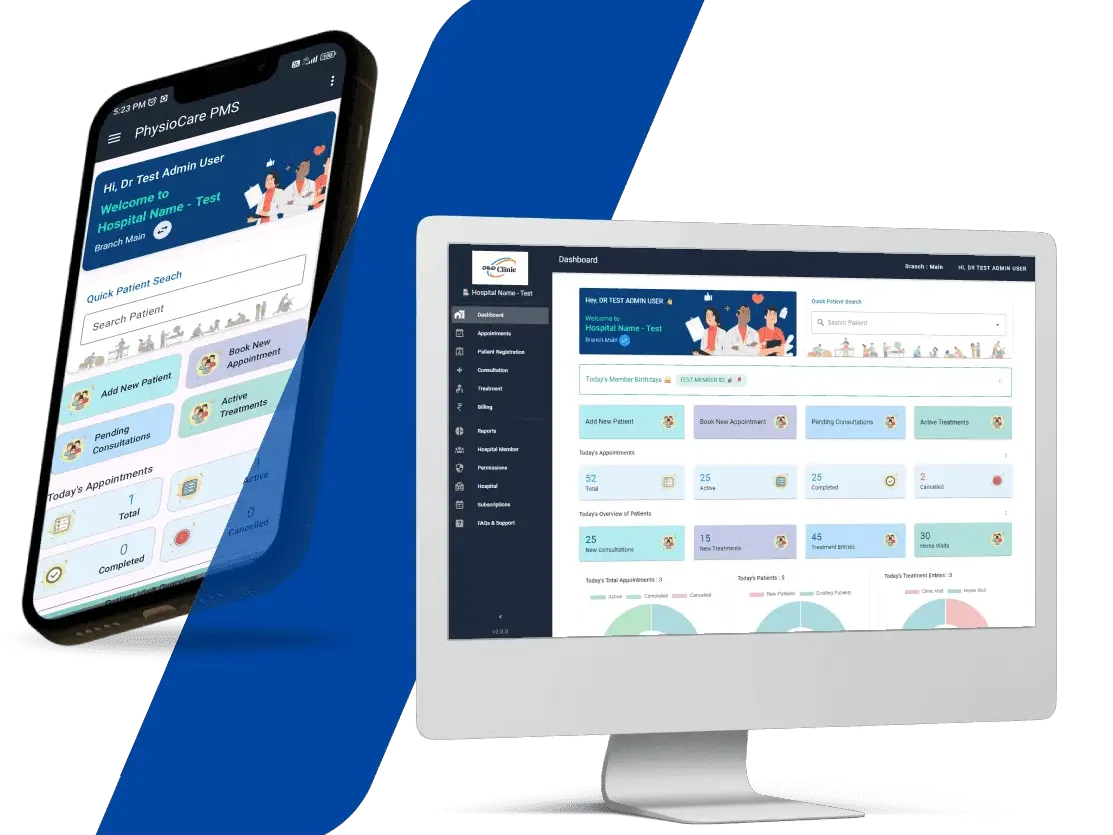
- Unified Patient View: Instead of toggling between three different screens for patient history, today's treatment, and past invoices, an integrated dashboard presents a holistic view. This means less clicking, faster access to critical information, and more face-to-face time with the patient.
The clinic efficiency improvement is measurable: practitioners report reclaiming 30-60 minutes per day, which can be redirected towards seeing more patients or refining treatment plans.
Ensuring Data Security and Compliance
For any healthcare practice, data is both an asset and a liability. Physiotherapy clinics handle sensitive Protected Health Information (PHI), including medical histories, treatment plans, and payment details.
- Centralized Security Protocols: A key advantage of a properly integrated data system is centralized security. Instead of managing security settings across multiple platforms, you have one set of robust protocols—encryption, access controls, audit logs—protecting all patient data. This simplifies compliance management significantly.
- Adherence to Regulations: In many regions, including India with its evolving Digital Personal Data Protection Act, and globally with standards like HIPAA, ensuring data privacy is mandatory. Integrated systems are built with these regulatory compliance requirements in mind. They ensure that data transfer between modules (e.g., from notes to billing) is secure and auditable, maintaining a clear chain of custody for all PHI.
- Reduced Risk of Human Error: Manual data entry between systems is a prime source of errors and potential data breaches. Integration minimizes this by automating data flow, ensuring accuracy and consistency while reducing the risk of sensitive information being mishandled.
By choosing an integrated physiotherapy management software integration, you are not just buying a tool; you are investing in a compliance framework that protects your practice and your patients.
Key Talking Points & Benefits of Integration:
- Enhanced Data Interoperability: Say goodbye to information silos. Treatment notes inform scheduling follow-ups, and billing reflects actual services delivered, all within the same ecosystem.
- Streamlined Workflows: Automating administrative tasks reduces the burden on your team, lowers operational costs, and minimizes frustration.
- Improved Patient Experience: Patients receive timely reminders, experience shorter wait times, and benefit from practitioners who have all their information at their fingertips.
- Competitive Advantage: A smooth, efficient, and tech-forward practice attracts and retains both patients and top-tier staff.
Key Considerations Before Starting the Integration Process
Jumping into integration without proper preparation is like starting a home renovation without a blueprint. You might end up with a beautiful kitchen, but the plumbing doesn't work. Careful planning is what separates a successful, transformative integration from a costly, disruptive failure. This phase is about asking the right questions and honestly assessing your current landscape to ensure your new clinic management solution aligns perfectly with your needs.
Evaluating Your Existing EHR
Your current EHR is the foundation. Understanding its capabilities and limitations is the first critical step. Use this checklist to assess its integration readiness:
| Assessment Area | Key Questions to Ask | Why It Matters |
|---|---|---|
| Technical Specifications | Does it have an open API (Application Programming Interface)? What data formats (HL7, FHIR, CSV) does it support for export/import? | An API is the "plug" for integration. Without it, seamless, real-time data exchange is very difficult. |
| Data Structure & Quality | Is patient data clean, consistent, and well-organized? How are treatment notes, diagnoses, and billing codes currently stored? | Migrating messy data will create problems in the new system. A data audit and cleanup may be necessary first. |
| Vendor Support | Does your EHR vendor provide integration support or have pre-built connectors with popular physiotherapy practice management software? | Vendor cooperation can make the process exponentially smoother and faster. |
| Current Pain Points | What specific workflows are slow or broken? Where are the biggest data silos? | This defines your integration goals. You're solving specific problems, not just adding technology. |
This software compatibility assessment will reveal whether your EHR is a flexible partner or a potential roadblock, guiding your next steps.
Choosing the Right Physiotherapy Software
Not all practice management software is created equal, especially when integration is the goal. Your selection criteria must extend beyond basic features.
- Native Integration Capabilities: Prioritize software that lists seamless EHR connectivity as a core feature. Look for phrases like "API-first architecture," "HL7/FHIR compatible," or mentions of specific EHR partners. Ask potential vendors for a detailed integration methodology or case studies.
- Feature Alignment with Clinic Needs: The software must do more than just connect; it must excel at the daily tasks of a physiotherapy clinic. Essential features include:
- Intelligent Scheduling: That accounts for therapist specialties, room availability, and appointment types.
- Comprehensive Treatment Notes: With customizable templates, body charts, and outcome measure tracking.
- Flexible Billing & Packages: To handle session packages, insurance claims, and direct invoices effortlessly.
- Automated Communication: For reminders, follow-ups, and recalls.
- Vendor Viability and Support: Choose a vendor with a proven track record, like those trusted by 1000+ clinics in India. Evaluate their customer support structure,will they provide dedicated help during and after integration? What is their policy on updates and maintaining compatibility with your EHR?
Your chosen software should feel less like a new tool and more like a natural extension of your existing EHR systems for physiotherapy.
Actionable Planning Steps:
- Assess & Clean: Conduct the EHR audit and clean your patient data.
- Define Requirements: List must-have features versus nice-to-haves for your new software.
- Budget Realistically: Account for software subscription, one-time integration fees, data migration services, and essential staff training time.
- Form a Team: Identify a project lead (often the clinic owner or head physiotherapist) and key stakeholders from admin and clinical staff.
A Step-by-Step Guide to Seamless Integration
With a clear plan and the right software chosen, you can now navigate the integration process with confidence. This step-by-step integration guide breaks down the journey into manageable phases, focusing on minimizing disruption and ensuring a successful outcome. Think of it as a carefully coordinated clinical protocol for your practice's technological health.
Planning and Preparation
This phase sets the trajectory for the entire project. A detailed roadmap is your most important asset.
- Define Clear Goals & Success Metrics: What does success look like? Is it a 20% reduction in administrative time? A 15% decrease in no-shows? Define 3-5 specific, measurable objectives.
- Develop a Detailed Project Plan: Create a timeline with clear milestones (e.g., "Data Migration Complete," "Staff Training Week," "Go-Live Date"). Assign every task to an owner. A typical project might span 6-10 weeks.
- Establish a Risk Mitigation Plan: Identify potential risks—like data migration errors or staff resistance—and document contingency plans for each.
- Communication Strategy: Inform your team early and often. Explain the *why* behind the change—focusing on how it will make their jobs easier and improve patient care—to build buy-in from the start.
Data Migration Best Practices
This is often the most critical technical phase. The goal is to move your historical patient data securely and accurately.
- Extract, Clean, Transform, Load (ETL): This is the standard process. You *extract* data from your old system, *clean* it (fixing inconsistencies, removing duplicates), *transform* it to fit the new system's structure, and finally *load* it in.
- The Non-Negotiable: Backup Everything: Before any migration begins, take a full, verified backup of all data from your existing EHR and practice management systems. This is your safety net.
- Pilot Migration: Never migrate all data at once. Start with a small, non-critical subset of records (e.g., 50 closed patient files). Test this pilot data thoroughly in the new, integrated environment.
- Validation is Key: After migration, run validation checks. Compare record counts, spot-check individual patient files for accuracy, and ensure all data relationships (e.g., a patient's invoices linked to their profile) are intact.
Following these data migration best practices ensures your practice's valuable history is preserved and ready for use in the new system.
Testing and Quality Assurance
Before going live, rigorous testing is essential to catch and fix issues in a controlled environment.
- Unit Testing: Test individual functions. Can you create a new patient profile? Does saving a treatment note trigger the correct billing item?
- Integration Testing: This tests the *flow* between systems. Schedule an appointment—does it block time in the calendar *and* create a log in the patient's EHR?
- User Acceptance Testing (UAT): This is the most important phase. Your actual staff—physiotherapists, receptionists, billing officers—use the system to perform their daily tasks in a sandbox environment.
- Staff Training: Training should happen *during* UAT, not after. Hands-on experience in a test environment reduces anxiety and builds competence.
The Go-Live Sequence:
- Final data sync and system freeze.
- Launch the integrated system, often on a lighter day (e.g., a Wednesday).
- Have super-users and vendor support on standby for immediate issue resolution.
- Monitor system performance closely for the first 72 hours.
Overcoming Common Integration Challenges
Even with perfect planning, challenges will arise. Anticipating these hurdles and knowing how to address them turns potential crises into manageable setbacks. Here are solutions for the most common integration challenges faced by physiotherapy clinics.
Addressing Technical Hurdles
Technical issues are almost inevitable, but they are solvable with a systematic approach.
- API Conflicts or Connectivity Drops: This is when the "handshake" between your EHR and the new software fails. Work with both vendors' technical teams. Have clear error logs ready.
- Data Format Mismatches: Your old system might call a field "Pt. DOB," while the new one expects "PatientBirthDate." This is why the "Transform" stage in ETL is crucial.
- Performance Lag: The new integrated system feels slow. This could be due to unoptimized database queries, insufficient server resources, or local network issues.
Effective EHR integration troubleshooting relies on clear communication with your vendors and detailed documentation of every error and solution.
Managing Change in the Clinic
The human element is often the greater challenge. Staff may be comfortable with the old, inefficient way and fear the new system.
- Communicate the "WIIFM" (What's In It For Me): Don't just announce a change; sell the benefit. To therapists: "You'll spend less time on notes and more with patients."
- Involve Champions Early: Identify tech-savvy or respected team members during the planning phase. Their endorsement is powerful.
- Provide Ample, Role-Specific Training: A one-size-fits-all training session will fail. Receptionists need deep training on scheduling, while physios need to master treatment notes.
- Gather Feedback and Iterate: After go-live, create a simple channel (like a shared document or weekly check-in) for staff to report issues or suggest improvements. Acting on this feedback shows the team they are heard and that the system is evolving to support them.
Common Pitfalls to Avoid:
- Under-budgeting for Training: This is a critical cost, not an optional extra.
- Ignoring Data Cleanup: Migrating "garbage" data gives you a "garbage" new system.
- Lack of Post-Launch Support: Plan for at least 2-4 weeks of intensive support after go-live.
Measuring the ROI and Benefits of Integration
Integration is an investment, and like any good investment, you need to measure its return. The benefits of EHR integration extend far beyond the initial go-live, delivering value that compounds over time, supporting sustainable clinic growth with integrated systems.
Quantifiable Benefits
These are the hard numbers that directly impact your bottom line and justify the investment.
- Time Savings & Increased Revenue: A study by the American Academy of Family Physicians found that integrated systems can save practitioners an average of 1.5 hours per day on administrative tasks. For a clinic, this reclaimed time can be converted into seeing more patients.
- Reduced Administrative Costs: Automating scheduling, reminders, and billing reduces the need for overtime pay or additional administrative staff. It also drastically lowers errors in billing, which means fewer claim rejections and faster payment cycles.
- Improved Operational Metrics: Track key performance indicators (KPIs) before and after integration: Patient No-Show Rate often decreases by 20-30% with automated reminders.
The ROI of physiotherapy software can often be realized within 12-18 months through these direct efficiencies.
Long-term Advantages
Beyond the numbers, integration builds a foundation for the future of your practice.
- Scalability for Growth: An integrated system scales with you. Opening a second location? The software can manage multi-site scheduling and reporting. Adding home care services? Mobile access and streamlined documentation make it simple.
- Enhanced Clinical Decision-Making: With a complete, longitudinal patient record easily accessible, physiotherapists can identify trends, assess the efficacy of treatment protocols over time, and make more informed, data-driven decisions to improve patient outcomes.
- Future-Proofing: The healthcare technology ecosystem is always evolving. An integrated, API-ready practice is poised to connect with new tools—like wearable device data, telemedicine platforms, or advanced analytics dashboards—with far less friction.
- Reputation and Retention: An efficient, modern practice attracts and retains both patients who value seamless care and top-tier staff who want to work with the best tools.
A Final Measure of Success: The ultimate metric is when the integrated system becomes invisible,when your team can't imagine how they ever worked without it, and your patients simply experience smoother, more attentive care.
Conclusion
Seamlessly integrating physiotherapy management software with EHR systems is essential for modern clinics to enhance efficiency, compliance, and patient care, and it's achievable with careful planning and execution. The journey from fragmented systems to a unified platform involves evaluating your current tools, choosing the right partner, meticulously planning the integration, and proactively managing both technical and human challenges. The reward is a practice that runs smoothly, scales effortlessly, and allows you to focus on what matters most: delivering exceptional physiotherapy outcomes.
Ready to transform your practice? Stop letting software limitations hold you back. Explore our trusted physiotherapy practice management software, trusted by 1000+ clinics in India, designed from the ground up for seamless integration. Handle scheduling, treatment notes, invoices, packages, and automated reminders—everything your practice needs to grow, all in one simple, connected solution. Schedule a demo for seamless EHR integration today and see the difference a truly integrated clinic can make.
Trusted by 1000+ physiotherapy, sports therapy, chiropractic, and rehab clinics across India.