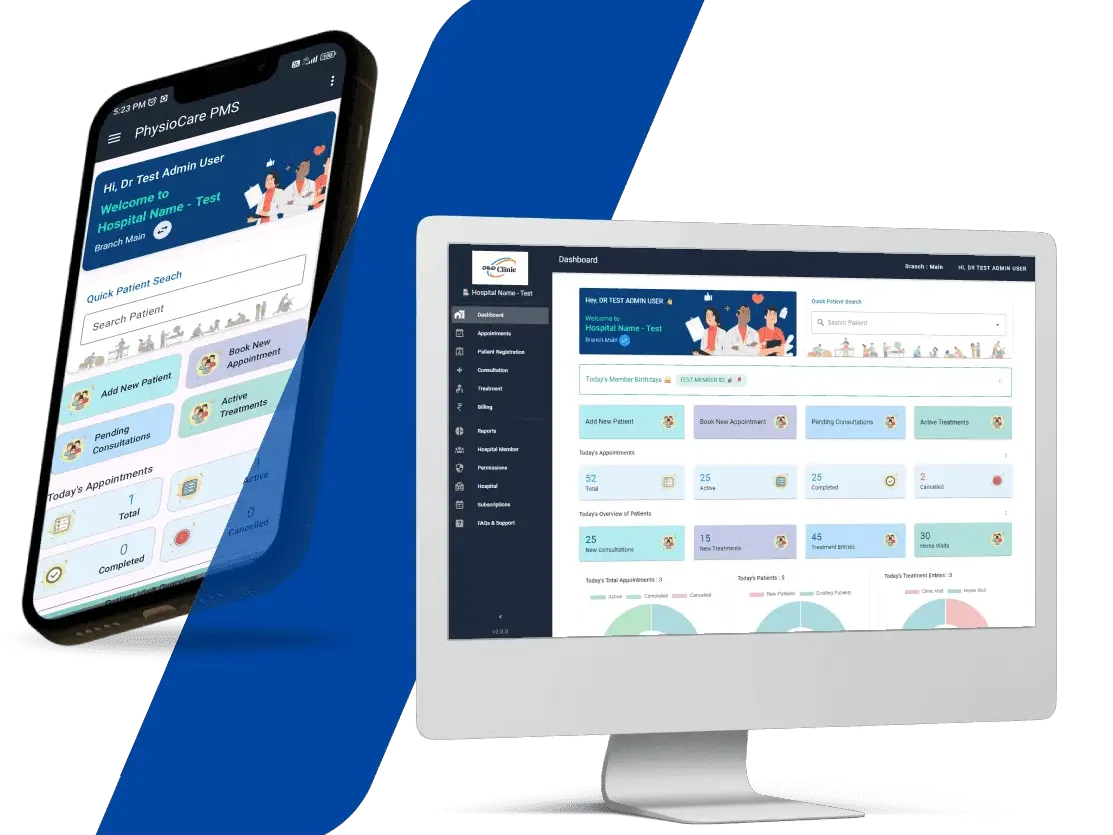
Measuring ROI: How Physiotherapy Clinic Software Impacts Bottom Line

Learn to measure and maximize the return on investment of physiotherapy clinic management software with clear financial frameworks and real-world examples.

Unlocking ROI with Physiotherapy Clinic Management Software

Are you watching your clinic's hard-earned revenue seep away through scheduling gaps, billing errors, and administrative chaos? You're not alone. Countless physiotherapy, chiropractic, and osteopathic practices are trapped in a cycle of manual processes that drain profitability, limit growth, and push staff toward burnout. The root cause is often invisible: inefficient systems that consume time and money you could be investing in patient care and practice expansion. This article cuts through the complexity. You will learn a clear, actionable framework to measure and maximize the return on investment (ROI) of physiotherapy clinic management software. We'll move beyond theory to provide you with the tools to calculate real financial impact, turning software from a cost center into a powerful engine for boosting your bottom line and reclaiming your time.

Understanding ROI in the Context of Physiotherapy Clinics

For any healthcare practice, sustainability hinges on financial health. Yet, for many physiotherapy clinic owners—who are often practitioners first and business managers second—financial metrics can feel abstract. Return on Investment (ROI) is the definitive measure that bridges this gap. It tells you, in concrete financial terms, whether the money you put into a new system, like management software, is generating a worthwhile return.

At its core, ROI calculates the efficiency of an investment. It answers the question: "For every rupee I spend, how much do I get back?" This is crucial for clinic profitability. When resources are limited, understanding ROI ensures you allocate capital to initiatives that genuinely drive growth, whether that's new equipment, marketing, or, critically, the software that runs your entire operation.

Common financial challenges faced by practices include unpredictable cash flow due to delayed payments, high administrative overhead eating into margins, and lost revenue from unfilled appointment slots or patient attrition. These aren't just operational hiccups; they are direct threats to your clinic's viability. Measuring ROI is frequently overlooked in healthcare settings because the immediate demands of patient care always seem more urgent. Furthermore, without the right tools, gathering the necessary data to perform an accurate calculation can feel daunting, leading many to make software decisions based on gut feeling rather than hard evidence.

The Basics of ROI Calculation

The fundamental ROI formula is:

ROI = (Net Gain from Investment / Cost of Investment) x 100

Let's translate this for a physiotherapy clinic considering management software.

  • Net Gain from Investment: This is the total financial benefit the software creates minus its cost. Benefits include both tangible savings (e.g., reduced labour hours spent on manual scheduling) and new revenue (e.g., income from extra appointments filled due to automated reminders).
  • Cost of Investment: This includes the initial costs (software purchase or setup fees, any necessary hardware) and ongoing costs (monthly/annual subscriptions, training, support).

For example, if a software solution costs ₹50,000 annually but saves you ₹40,000 in reduced admin salary overhead and generates an additional ₹40,000 in new revenue from decreased no-shows, your net gain is ₹80,000 - ₹50,000 = ₹30,000. Your ROI would be (₹30,000 / ₹50,000) x 100 = 60%. This means you earn back your investment plus an extra 60% in value.

Barriers to Effective ROI Measurement

Several obstacles prevent clinics from accurately assessing software impact. The most common is a lack of time; owners and practitioners are already stretched thin managing patients and daily operations. Conducting a detailed before-and-after analysis feels like a low-priority, complex project.

Secondly, a lack of clear data poses a significant hurdle. How many staff hours exactly are spent on manual invoicing each week? What is the precise financial impact of a typical billing error or a missed appointment? Without baseline metrics, measuring improvement is impossible.

Finally, a lack of the right tools to track these metrics perpetuates the cycle. If you're using paper files, spreadsheets, and disparate systems, consolidating data to see the big picture is manually intensive and error-prone. Overcoming these barriers starts with recognizing that the effort to measure ROI is itself an investment in making smarter, more profitable business decisions.

Key Features of Physiotherapy Clinic Management Software That Drive ROI

Investing in clinic management software isn't about buying features; it's about purchasing specific financial and operational outcomes. The right features directly attack the cost centers and revenue leaks in your practice. Here are the core functionalities that deliver the most significant ROI.

Scheduling and Appointment Optimization

A fully booked clinic is a profitable clinic, but filling the schedule efficiently is a constant challenge. Manual scheduling is time-consuming and prone to double-booking or gaps. Automated scheduling allows patients to book, reschedule, or cancel appointments online 24/7, capturing revenue even when your front desk is closed. It intelligently manages therapist availability, room bookings, and appointment types.

The direct ROI drivers here are substantial:

  • Reduced Administrative Time: What used to take a staff member 2-3 hours per day can be reduced to 30 minutes of oversight.
  • Improved Patient Satisfaction: Convenient booking and less wait time on calls improve the patient experience, leading to higher retention.
  • Increased Appointment Fill Rates: Integrated automated SMS and email reminders are proven to drastically reduce no-shows—a direct revenue recovery. If you currently have 10 no-shows a week at ₹800 per session, that's ₹8,000 in weekly lost revenue. A 20% reduction via reminders recovers ₹1,600 weekly, or over ₹75,000 annually.

Billing and Revenue Cycle Enhancements

The journey from providing care to receiving payment is fraught with delays and errors in a manual system. Handwritten invoices get lost, insurance details are entered incorrectly, and follow-ups on pending payments are inconsistent. Streamlined billing software integrates directly with appointments and treatment notes to generate accurate invoices instantly.

This enhances your revenue cycle by:

  • Reducing Errors: Automated population of patient data, treatment codes, and package details minimises billing mistakes that lead to claim rejections and payment delays.
  • Accelerating Cash Flow: Electronic invoices can be sent immediately post-session, and online payment gateways allow for instant settlement. This can shrink your average payment collection time from 30-45 days to under 7 days.
  • Enhancing Financial Transparency: Real-time dashboards show you outstanding payments, daily revenue, and package utilization at a glance, enabling proactive financial management.

Clinical Documentation and Compliance

The time therapists spend on paperwork is time not spent with patients. Digital treatment notes and patient records streamline this critical process. With customizable templates, therapists can document sessions quickly using dropdowns, checkboxes, and voice-to-text features, ensuring all necessary clinical information is captured accurately and consistently.

The ROI here is multi-faceted:

  • Time Savings on Paperwork: Saving 10-15 minutes per patient per day allows a therapist to see one more patient per week or finish on time, reducing burnout.
  • Improved Care Quality: Quick access to a patient's full history, progress notes, and prescribed exercises leads to more informed, continuous care.
  • Regulatory Compliance: Digital records are easier to secure, audit, and maintain as per standards, avoiding potential fines and legal complications. Integrated package and inventory management further tracks the usage of pre-paid plans and clinic supplies, providing clear data on your most profitable services and inventory costs.

Step-by-Step Guide to Calculating ROI for Your Clinic Software

Turning the concept of ROI into a concrete number for your clinic requires a structured approach. Follow this three-step guide to move from estimation to a clear financial projection.

Step 1: Assess Current Costs and Inefficiencies

You cannot measure improvement without a baseline. This step is about auditing your current "business-as-usual" costs. Focus on quantifiable areas:

  • Staffing Expenses for Administrative Tasks: Calculate the hours per week your front desk and practitioners spend on scheduling, manual data entry, filing, and payment chasing. Multiply by their hourly wage. For instance, 15 hours/week of admin work at ₹300/hour costs ₹4,500 weekly.
  • Cost of Errors and Delays: Estimate the monthly value of billing errors that lead to rework or lost payments. Track the revenue lost to no-shows and last-minute cancellations.
  • Opportunity Cost: What revenue could you generate if your therapists had more time for patients? What if you could easily offer Appointment booking to capture after-hours appointments?

Action: For two weeks, have staff log time spent on specific manual tasks. Review appointment books for no-shows and invoices for correction notes.

Step 2: Project Software Benefits and Savings

Now, project how software would impact each cost area identified. Be realistic but don't undervalue indirect benefits.

  • Quantify Time Savings: If software automates 70% of your manual scheduling and billing time, apply that savings to your staffing cost calculation.
  • Quantify Error Reduction: Estimate a percentage reduction in billing errors and associated rework costs.
  • Quantify Revenue Gains: Research industry averages: automated reminders can reduce no-shows by 15-25%. Apply this to your lost revenue figure. Also, consider revenue from new appointment slots made available by efficiency gains.

Step 3: Perform the ROI Calculation

Bring it all together using the ROI formula. Let's create a practical one-year projection for a sample clinic.

Assumptions for "City Physio Clinic":

  • Software Annual Cost: ₹60,000
  • Current State:
    • Admin labour for manual tasks: ₹20,000/month
    • Revenue lost to no-shows: ₹15,000/month
    • Billing/claim error costs: ₹3,000/month
  • Projected Software Impact:
    • Reduce admin labour cost by 50%
    • Reduce no-show losses by 20%
    • Reduce billing errors by 60%
MetricAnnual Cost (Current)Projected Savings/GainCalculation
Admin Labour Cost₹240,000₹120,000(50% of ₹240,000)
No-Show Losses₹180,000₹36,000(20% of ₹180,000)
Billing Error Costs₹36,000₹21,600(60% of ₹36,000)
Total Annual Benefit₹177,600(Sum of Savings)
Software Cost₹60,000
Net Gain₹117,600(Benefit - Cost)
Annual ROI196%(₹117,600 / ₹60,000) x 100

This table shows a clear 196% return in the first year alone, meaning the software pays for itself almost three times over. Your clinic's numbers will vary, but this framework provides the structure to find your true figure.

Real-World Impact: How Software Transforms Clinic Operations

Theory is compelling, but real-world results are conclusive. Here's how the ROI principles translate into tangible success for practices.

Clinic A: Boosting Revenue with Automated Reminders

A mid-sized physiotherapy practice in Mumbai was struggling with a consistent 18% no-show rate, despite phone reminders. This represented a significant revenue drain and disrupted therapist schedules. After implementing management software with automated SMS and email reminders sent 48 hours and 24 hours before each appointment, they saw an immediate shift.

Within three months, their no-show rate dropped to 14.5%, a 20% relative reduction. For a clinic averaging 400 appointments per month at ₹1,000 per session, this meant recovering 14 previously lost appointments monthly—an additional ₹14,000 in revenue every month, or ₹1,68,000 annually. This gain came purely from better communication, requiring no extra marketing or staff effort, delivering an ROI that far exceeded the software's cost.

Clinic B: Cutting Costs Through Streamlined Billing

A multi-disciplinary clinic in Delhi employing two full-time administrative staff found them constantly overwhelmed by manual invoicing, insurance claim paperwork, and payment follow-ups. Errors were common, leading to delayed reimbursements and patient confusion.

By adopting an integrated management system, they automated invoice generation post-consultation and streamlined insurance form-filling. Within six months, they were able to reallocate one administrative staff member to focus on patient relations and growth initiatives, effectively saving 50% of that salary cost. Furthermore, payment collection cycles shortened from 35 days to 12 days on average, dramatically improving cash flow. The combined savings on labour and finance costs amounted to over 30% of their previous administrative overhead, transforming a cost center into a source of efficiency and patient satisfaction.

Choosing the Right Software for Maximum ROI

Selecting software is a strategic investment decision. The goal is not to find the cheapest option, but the one that will deliver the highest long-term return on investment for your specific clinic.

Evaluating Software Features for Your Needs

Start by aligning software capabilities with your clinic's biggest pain points and growth goals. Create a priority list:

  1. Must-Haves for Core ROI: If no-shows are crippling, prioritise robust automated scheduling and reminders. If cash flow is the issue, focus on billing and payment integration.
  2. Efficiency Drivers: Digital treatment notes save practitioner time. Reporting dashboards provide the data you need to make smarter business decisions.
  3. Scalability: Can the software grow with you? Will it handle a second location, more therapists, or new service lines?

Don't pay for features you won't use. A simple, focused tool that solves your key problems will deliver better ROI than a complex, expensive system with redundant bells and whistles.

Cost-Benefit Analysis and Vendor Comparison

Move beyond listed features and monthly prices. Conduct a proper cost-benefit analysis.

  • Total Cost of Ownership (TCO): Account for setup fees, training costs, and any required hardware.
  • Subscription Model: Understand what's included (support, updates, data storage).
  • Potential Return: Use the calculation framework from Section 3 to model returns for each shortlisted vendor.

Action: Ask vendors for case studies or references from clinics similar to yours. Specific questions like, "By what percentage did your clients typically reduce administrative time?" can yield valuable data for your analysis.

Best Practices for Implementation and Training

The best software will fail without proper adoption. Maximise your ROI from day one with a solid plan:

  • Phased Rollout: Don't switch everything overnight. Start with scheduling and patient registration, then move to billing, then documentation.
  • Comprehensive Training: Ensure every team member—from front desk to senior therapists—understands how to use the system and why it benefits them. Highlight time-saving aspects.
  • Designate a Champion: Appoint a tech-savvy staff member to be the internal point person for questions.
  • Monitor and Adapt: Review key metrics (no-show rate, time-to-invoice, admin hours) monthly after implementation to track progress and identify areas needing extra focus or training.

Conclusion

Physiotherapy clinic management software is far more than a digital notebook; it is a strategic investment that directly enhances your clinic's financial health and operational freedom. As we've demonstrated, the ROI can be substantial—quantified through reduced administrative burdens, recovered lost revenue, and accelerated cash flow. By automating routine tasks, you free up your most valuable resources (your time and your team's expertise) to focus on what truly matters: delivering exceptional patient care and growing your practice.

The path to unlocking this value begins with understanding your own numbers, choosing a solution tailored to your clinic's specific challenges, and committing to a smooth implementation.

Key Takeaway: Physiotherapy clinic management software is a strategic investment that can deliver substantial ROI by automating tasks, reducing errors, and enhancing patient care, ultimately driving profitability and growth.

Ready to see what this transformation looks like for your practice? Start maximizing your clinic's ROI today by exploring our trusted software solution. Physiocarepms is trusted by 1000+ clinics across India to handle scheduling, treatment notes, invoices, packages, and automated reminders—everything your practice needs to grow. Schedule a demo or sign up for a free trial to see the impact firsthand on your operations and your bottom line.

Create Your Free Account Now

Trusted by 1000+ physiotherapy, sports therapy, chiropractic, and rehab clinics across India.

PhysioCare PMS Editorial Team
Practice Management Specialists
Updated 5/2/2026
Related features
Prefer a guided walkthrough? Book a free demo .

Frequently Asked Questions About PhysioCare PMS

Find answers to common questions about our physiotherapy practice management software, features, pricing, and more.

About PhysioCare PMS
Empowering physiotherapy clinics with comprehensive practice management solutions.
Recognized By
Get PhysioCare PMS on Google Play
Download PhysioCare PMS on the App Store
Contact PhysioCare PMS
608, Alpha Plus, Raiya Telephone Exchange, 150 Feet Ring Road
Rajkot - 360007, Gujarat, India
info@physiocarepms.com
+91 81400 05811

© 2023 - 2026 DND Software Pvt. Ltd. All rights reserved.

This website uses cookies to enhance your experience. By clicking "Accept", you consent to the use of cookies.